AWS vs Microsoft Azure: Which One Is Better?
Amazon Web Services (AWS) and Microsoft Azure are the two dominant public cloud platforms, and choosing between them is one of the most consequential infrastructure decisions a business can make. This comparison looks at where each platform excels — from services and pricing to integration and hybrid capability — so you can decide which fits your organisation best.
Introduction to AWS and Microsoft Azure
AWS, launched in 2006, pioneered the public cloud and today offers more than 200 fully featured services from data centres around the world. Microsoft Azure, introduced in 2010, leverages Microsoft's enterprise customer base and integrates deeply with Office 365, Windows Server and Active Directory.
Market share and adoption
AWS leads the global market with roughly 32% share, while Microsoft Azure holds around 23%. Azure has grown rapidly, particularly in government, finance and enterprise sectors, thanks to its hybrid capabilities and regulatory compliance readiness.
Feature comparison: AWS vs Microsoft Azure
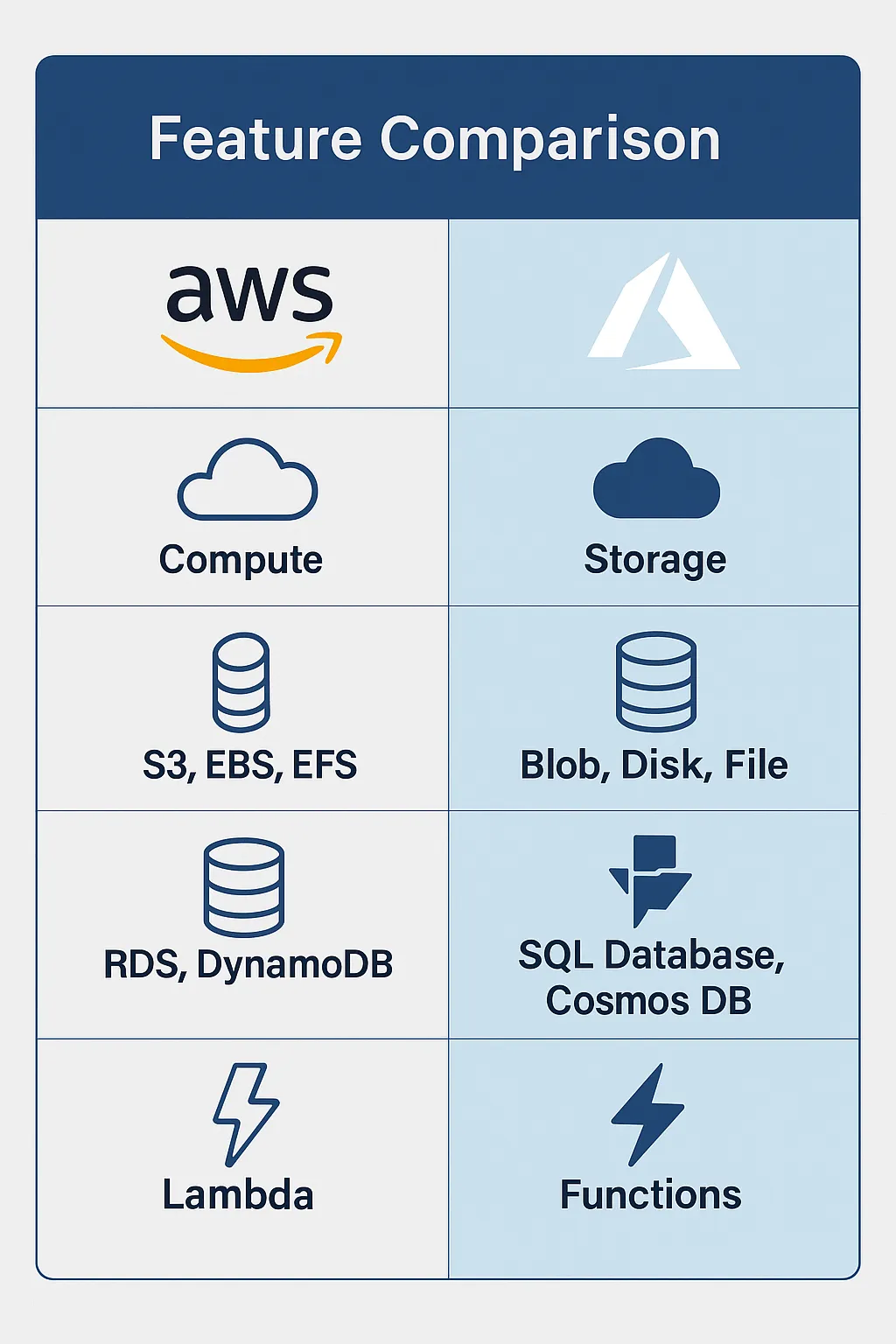
Compute services
- AWS: EC2 (scalable virtual machines), ECS/EKS (container services), Lambda (serverless)
- Azure: Virtual Machines, Container Instances, Azure Kubernetes Service (AKS), Azure Functions (serverless)
Storage solutions
- AWS: S3 (object storage), EBS (block storage), EFS (file storage)
- Azure: Blob Storage (object), Disk Storage (block), File Storage (file-based)
Database options
- AWS: RDS (relational), DynamoDB (NoSQL), Redshift (data warehouse)
- Azure: SQL Database (relational), Cosmos DB (NoSQL), Synapse Analytics (data warehouse)
Security and compliance
Both platforms provide enterprise-grade security with identity and access management, encryption, threat detection, and compliance with global standards including ISO, GDPR, HIPAA and SOC certifications.
Pricing and cost management
Both operate on pay-as-you-go models, with structures that differ by region, service and usage pattern.
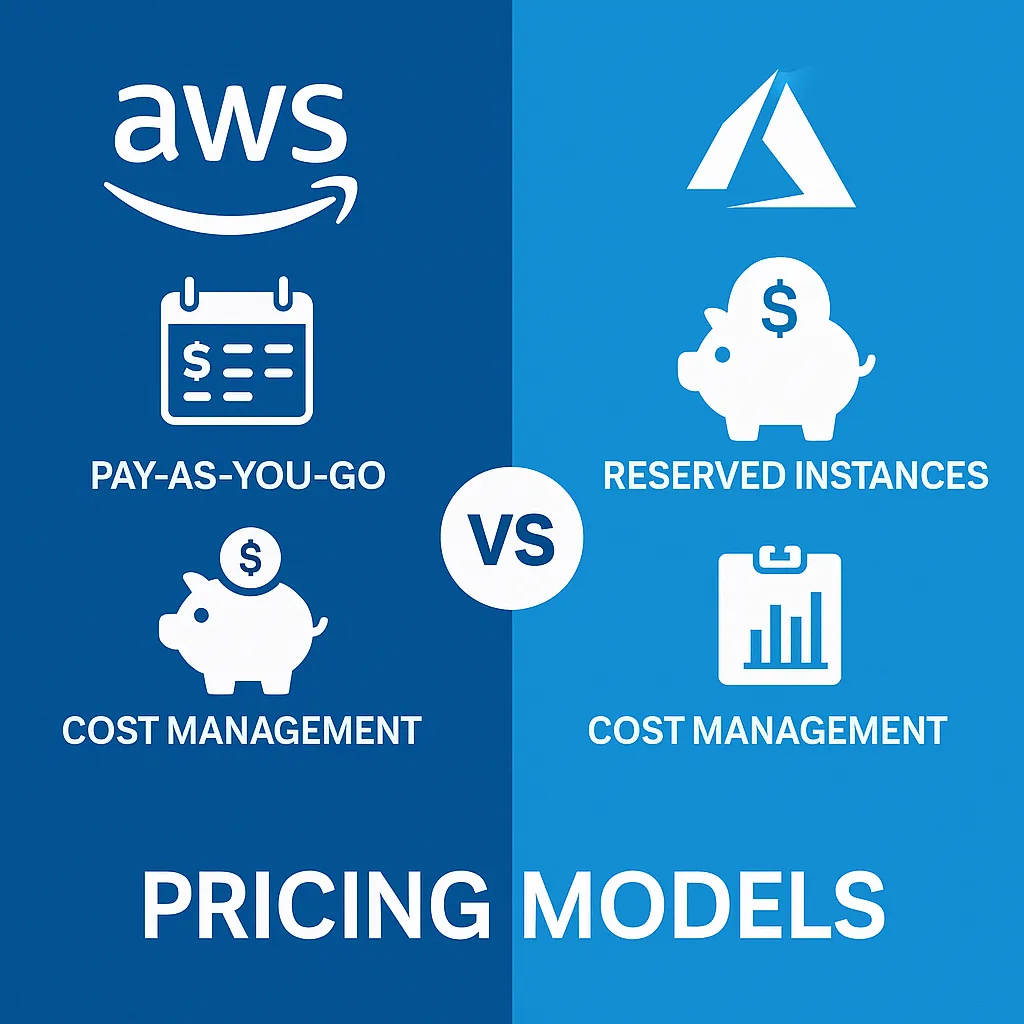
- AWS: Known for flexible pricing tiers, Reserved Instances for cost saving, and pricing calculators
- Azure: Offers comparable pricing with cost management tools, Azure Hybrid Benefit, and greater efficiency for Windows-based environments
For businesses already invested in Microsoft technologies, Azure often ends up being more cost-effective due to licence reuse — especially for Windows Server and SQL Server.
Integration and ecosystem
Azure's primary strength is native integration with Microsoft 365, Dynamics 365, the Power Platform and Windows environments. That makes life seamless for IT departments already managing devices with Microsoft Endpoint Manager, Intune and Microsoft Entra ID (formerly Azure AD).
AWS offers greater flexibility and customisation, with broader support for third-party platforms and development environments — a favourite of startups, developers and innovation-focused enterprises.
Hybrid and multi-cloud capabilities
Azure leads in hybrid deployments through Azure Arc, Azure Stack and tight integration with on-premises Windows systems, supporting a consistent cloud experience across platforms.
AWS bridges the gap with AWS Outposts and Local Zones, though Azure retains the advantage in hybrid readiness.
Performance and reliability
AWS maintains more availability zones and data centres globally. Azure continues to expand its footprint and improve latency through edge zones and partnerships. Both offer high-availability SLAs and disaster recovery features; the right choice depends on server locations, service-level requirements and compliance needs.
Support and documentation
- AWS: Multiple support tiers (Basic, Developer, Business, Enterprise) with extensive documentation and a large developer community
- Azure: Similar support levels, with unified ticketing across Microsoft services — simpler for businesses already handling Office 365 or Windows issues
Use cases and customer base
- AWS: Media and entertainment, retail, startups, gaming, finance
- Azure: Government agencies, education, healthcare, finance, and enterprises heavily integrated with Microsoft tools
AWS vs Microsoft Azure: which one is better for your business?
There's no universal answer — the right choice depends on your unique business needs, existing technology stack and IT roadmap.
Choose AWS if:
- You need advanced customisation and broad third-party integrations
- You're building modern applications and microservices architecture at scale
- Your organisation prioritises open-source support and technical flexibility
Choose Microsoft Azure if:
- You're already deeply integrated with Microsoft 365, Windows or Dynamics 365
- You're pursuing a hybrid cloud strategy combining on-premises and cloud environments
- You value unified management, familiar tools and user productivity
Conclusion
AWS leads in market share, innovation and service breadth. Azure excels in integration, hybrid capabilities and enterprise support. Evaluate your current infrastructure, objectives and workforce skills before deciding.
Need help choosing or planning your cloud platform? Book a free consultation with Circuit Minds, or explore our Microsoft 365 and Azure consultancy services.
Want this handled for you?
Circuit Minds is a UK managed IT provider - plans from £35 per user/month, with a free Microsoft 365 security audit to start. Cancel with 30 days notice anytime in your first 3 months, no questions asked.